
British education is widely respected for its clarity, structure, and high standards. In England, the national curriculum sets out essential knowledge and progression expectations, and inspection frameworks focus on the quality of education and leadership.
For families across the UAE, “British-standard” support is not about intensity or pressure. It is about calm, well-paced teaching that builds clear understanding, strong technique, and consistent progress alongside school and 1:1 online tuitions with UK qualified tutor is the best solution for bright future.
Contents
- Clear explanations that build understanding step by step
- Strong emphasis on method and technique
- Consistent practice that develops accuracy
- High expectations presented with calm guidance
- Professional progress visibility that stays measured
- What this can look like in one-to-one online tuition
- How Greystone supports learners alongside school
- FAQs
1. Clear explanations that build understanding step by step
In practice, British-standard teaching aims to make learning feel logical and manageable. The tutor breaks concepts into clear steps, checks understanding frequently, and adjusts pacing so the learner can follow confidently.
What this looks like in a session:
- Starting with what the learner already knows, then building one step at a time
- Explaining new ideas using simple language before moving to more complex examples
- Asking short questions to confirm understanding, not to test confidence
- Repeating key steps in a calm way so the method becomes familiar
This approach aligns well with the national curriculum’s focus on essential knowledge and strong foundations.
2. Strong emphasis on method and technique
British-standard learning is not only about knowing content. It also focuses on how to apply it. Method and technique make performance more consistent, especially when learners need to show working, structure answers clearly, or manage multi-step questions.
What method and technique can include:
- A reliable way to start a question, so the first steps feel clear
- A consistent structure for working and checking accuracy
- A practical approach to reading and interpreting questions
- A repeatable pattern for showing reasoning clearly
This is one reason UK-qualified teachers are valued. In England, Qualified Teacher Status is a recognised benchmark and a legal requirement in many schools, reflecting the importance of professional training and standards.
3. Consistent practice that develops accuracy
British-standard support tends to prioritise consistency over volume. The goal is not “more work”. The goal is better practice, done steadily, so accuracy improves over time.
Strong practice often means:
- Short, targeted practice that matches what is being taught in school
- Repeating the same skill across a few similar questions to build consistency
- Reviewing mistakes to spot patterns, then practising the next step
- Returning to key skills across the term rather than treating revision as a single event
A steady routine also makes it easier for learners to stay organised alongside school.
4. High expectations presented with calm guidance
High standards do not need a dramatic tone. In British-standard teaching, expectations are often communicated through clarity and consistency.
What this looks like:
- Clear objectives for each session
- Precise language, with attention to accuracy and detail
- Encouraging learners to explain their thinking, not just give an answer
- Keeping the session calm and focused, even when the topic is demanding
This style supports confidence and keeps learning positive and sustainable.
5. Professional progress visibility that stays measured
Progress visibility is a key part of premium support, especially for parents who want clarity without exaggeration. A good update is short, specific, and useful.
What strong progress updates usually include:
- What was covered in the session
- What is becoming more consistent
- What needs the next focus
- One practical suggestion for the week ahead
This aligns with evidence-informed principles around effective feedback, where the focus is on actionable next steps and improving learning, rather than simply judging performance.
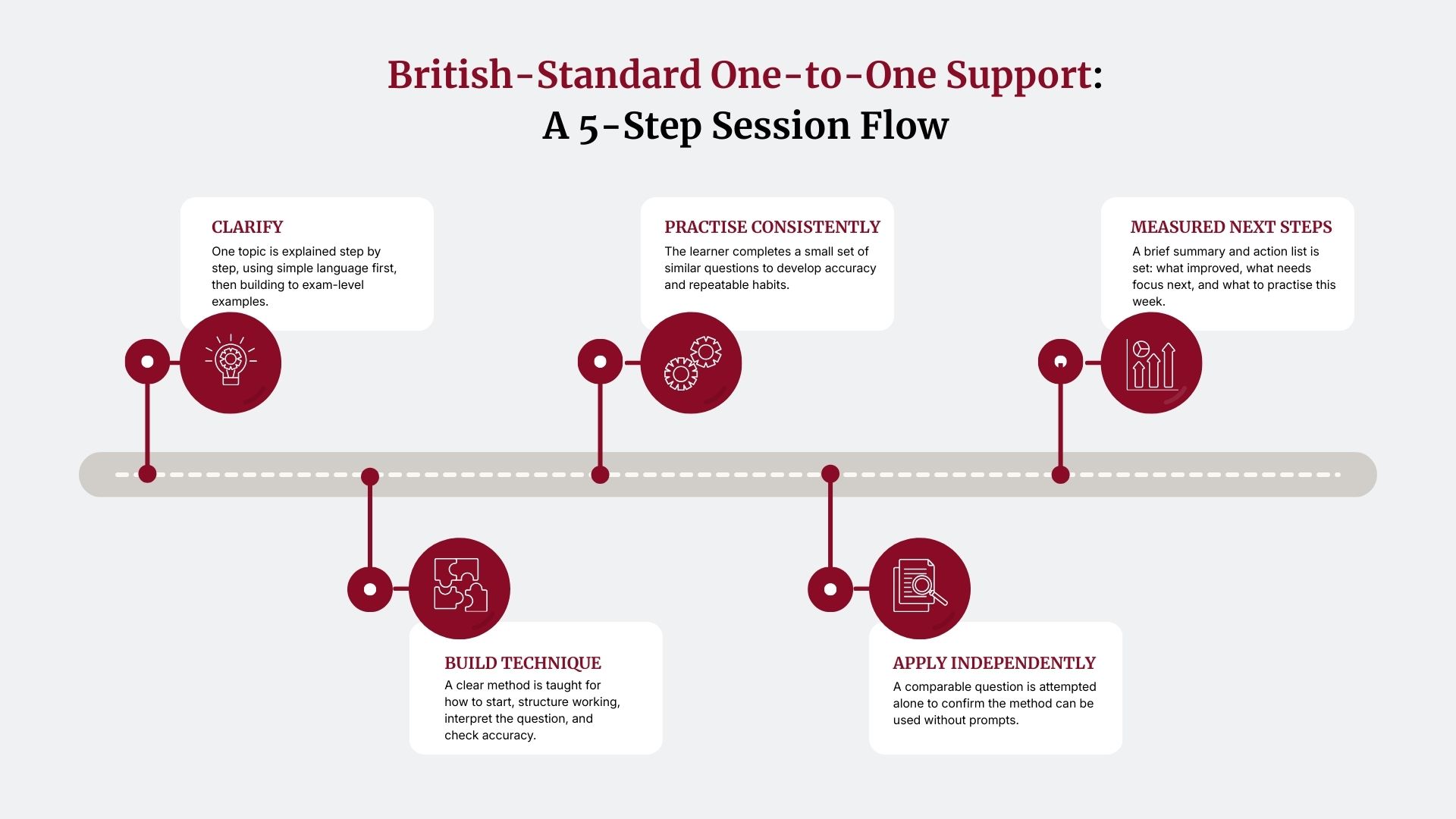
6. What this can look like in one-to-one online tuition
A premium one-to-one session often follows a predictable rhythm:
- Quick recap to settle understanding
- Clear teaching of the current topic
- Guided practice to build technique
- Independent practice to check consistency
- Short review and a clear next step
This structure helps learning feel organised, calm, and aligned to school priorities.
7. How Greystone supports learners alongside school
Greystone Tuition provides premium one-to-one online tuition delivered by UK-qualified teachers. Sessions are tailored to the learner and designed to support learning alongside school through clear understanding, structured support, and measured progress visibility.
If you are exploring support in English, Maths, and Science, you can review Academic Tuition. For learners focused on Mathematics, Sciences, and problem-solving, STEM Tuition is the most direct fit. For older learners, University Tuition and Career Support are available where relevant to the pathway.
8. FAQs
1. Can British-standard support work alongside any school curriculum in the UAE
Yes. The principles are curriculum-neutral: clear explanation, strong technique, steady practice, and professional feedback. Sessions can be aligned to the learner’s school topics and assessments.
2. What makes one-to-one tuition feel “premium” in practice
Premium support is well paced, tailored to the learner, structured in approach, and consistent in communication. It focuses on clarity and technique, with measured progress visibility.
3. How often should one-to-one sessions take place
There is no single rule. Many families choose a consistent weekly routine and adjust based on subject load and school commitments.
4. What should parents expect in a progress update
A brief, clear summary of what was covered, what is improving in consistency, and what the next focus is. It should be practical, specific, and not exaggerated.
5. How does a tutor keep sessions aligned to school priorities
By using the learner’s current topics, homework focus, assessment feedback, and upcoming objectives, then building method and technique within those same areas.
6. What is a sensible way to set goals
Keep goals practical and focused on steady improvement in understanding, technique, and consistency. The pace varies by learner, subject, and starting point.